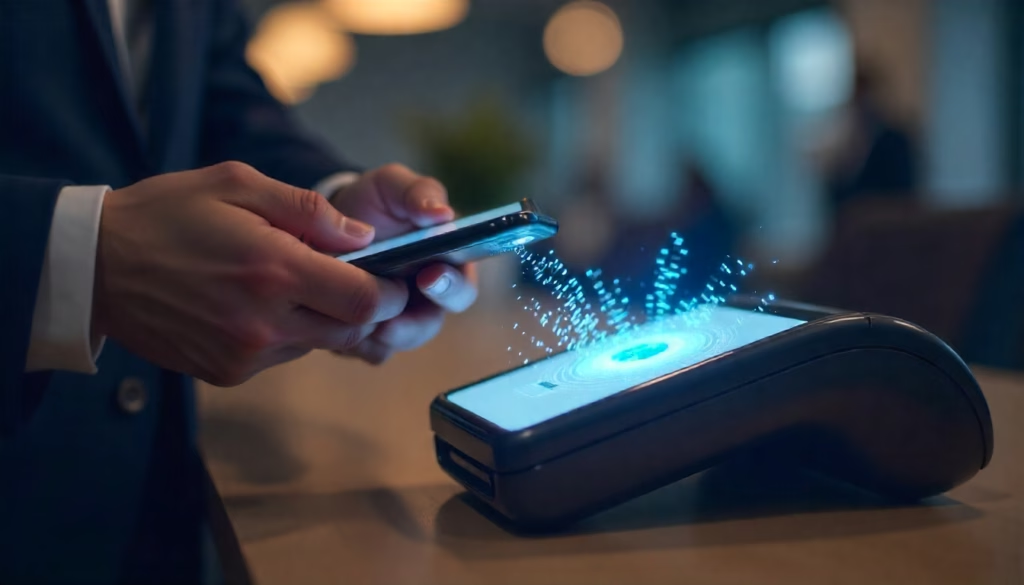
In today’s fast-paced digital era, mobile payments are redefining how people and businesses handle money. From digital wallets to contactless transactions, these innovations are making payments faster, safer, and more convenient. As smartphones and internet access become more widespread, mobile payments are quickly replacing cash and traditional card systems.
The global shift toward cashless transactions accelerated significantly during the COVID-19 pandemic, with major platforms like Apple Pay, Google Pay, Alipay, and Paytm leading the way. Consumers now expect seamless, one-tap payments — whether they’re shopping in stores or transferring money online.
Mobile payments allow users to make financial transactions through smartphones, tablets, or wearable devices. Using technologies such as Near Field Communication (NFC), QR codes, and biometric authentication, users can securely complete transactions in seconds. These systems not only improve convenience but also promote financial inclusion, giving people in remote areas access to digital financial services.
Apps like PayPal, Venmo, and WeChat Pay have become essential tools for managing personal finances. They store multiple cards, enable online purchases, and even allow peer-to-peer money transfers without the need for a physical bank.
NFC-based technology lets users pay instantly by tapping their phone or smartwatch on a terminal. This simple action has redefined speed and convenience in retail and transport sectors.
Fingerprints and facial recognition now secure many mobile payment apps, reducing the risk of fraud and unauthorized access.
Popular in Asia, QR-based payments give small businesses and customers a low-cost, efficient way to complete transactions — no expensive hardware needed.
Despite its benefits, mobile payments still face hurdles:
Cybersecurity Risks: Increasing digital transactions have attracted cybercriminals. Threats like phishing, malware, and SIM-swap attacks can compromise user data.
Regulatory Differences: Each country has its own financial regulations, making cross-border payments complex.
User Trust: Some consumers remain skeptical about data privacy and payment security.
To overcome these, financial institutions and fintech companies are investing heavily in AI-powered fraud detection, blockchain security, and regulatory compliance solutions.
The future of mobile payments looks promising. With advances in Artificial Intelligence (AI), blockchain, and Decentralized Finance (DeFi), the next wave of innovation will focus on:
Real-time fraud prevention
Smart contract automation
Global interoperability between platforms
These improvements will not only strengthen user trust but also help create a more inclusive financial ecosystem.
Mobile payments are no longer just a convenience — they’re a cornerstone of the digital economy. As technology evolves, the focus must remain on security, accessibility, and innovation. Collaboration between tech providers, banks, and regulators will be crucial to ensure safe, efficient, and globally accepted digital payment systems.
From NFC and biometrics to AI-driven fraud prevention, the evolution of mobile payments continues to shape the future of finance — making every transaction smarter, faster, and safer.
Monday – Friday (9.00am – 6.00pm)
Saturday, Sunday – Closed
Public Holidays – Closed
DuitNow Soundbox
Vending Machine Solutions
Soundbox Enterprise Solutions
NoQue POS
Xiibit Soundbox Software